How to Custom Polo Shirts from China: The Complete OEM/ODM Process
A step-by-step walkthrough of the real process behind a custom polo order — from spec sheet and sampling to payment terms, production timing and inspection.
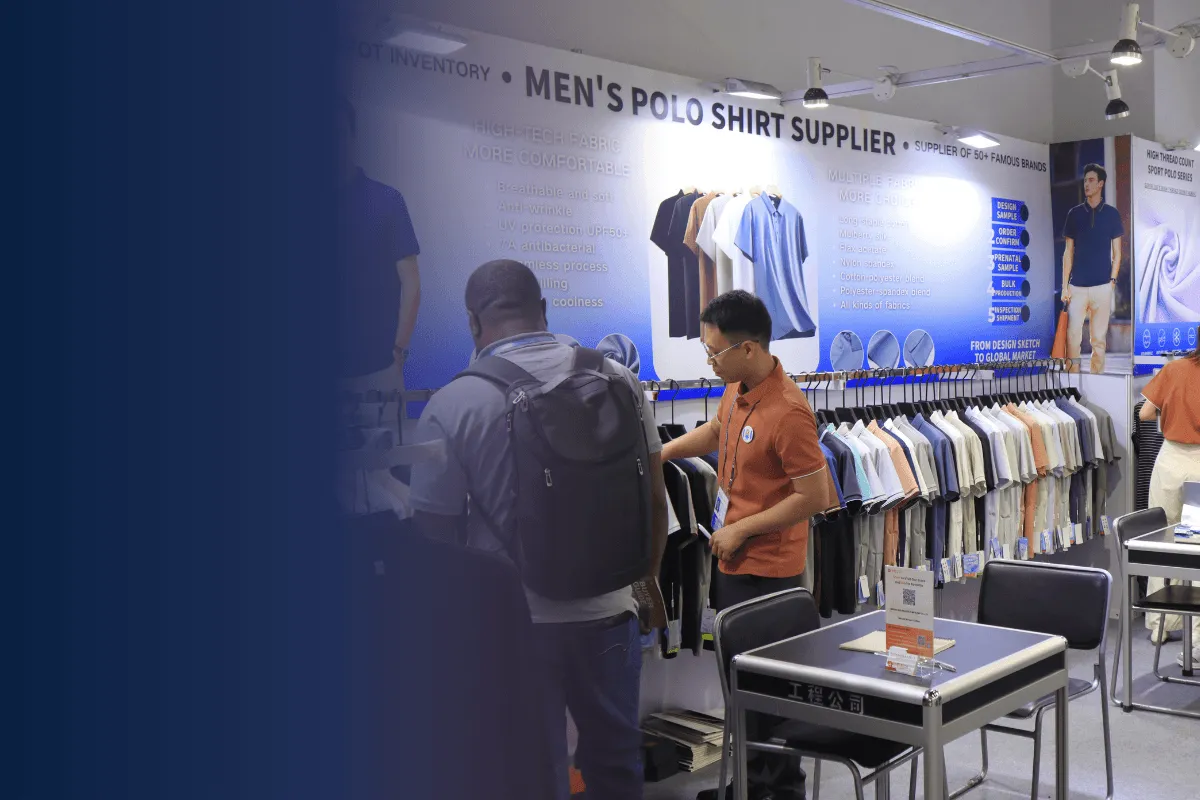
Most buyers who contact a factory for the first time send a message that says something like: "I need 500 polo shirts, what is your price?" Nine times out of ten that message gets a slow, vague reply — or none at all. It is not because factories are unfriendly. It is because a price cannot exist until the product exists, and at that point in the conversation the product is still a sentence.
This guide walks through the actual sequence of a custom polo order, in the order it really happens, with the numbers and documents involved at each stage.
What OEM and ODM actually mean
The two terms get used interchangeably in China, but they describe different starting points:
| Model | What the factory provides | What you provide | Typical MOQ |
|---|---|---|---|
| OEM | Production only — cutting, sewing, finishing, packing | Full design, pattern, size grading, fabric spec, labels | 100–300 pcs per colour |
| ODM | Existing block patterns, fabric library, trims, some design input | Colour choice, logo, label, minor modifications | 50–200 pcs per colour |
For a first order, most small and mid-size brands start with ODM on an existing block and move to OEM once a style has proven itself. Building a pattern from scratch costs money (USD 80–250 per style in most knitwear factories) and that cost only makes sense when you know the silhouette sells.
Step 1 — Define the product before you talk to anyone
A factory can quote accurately when it knows six things. If you can answer all six in your first email, you will usually get a real number within 24 hours instead of a range.
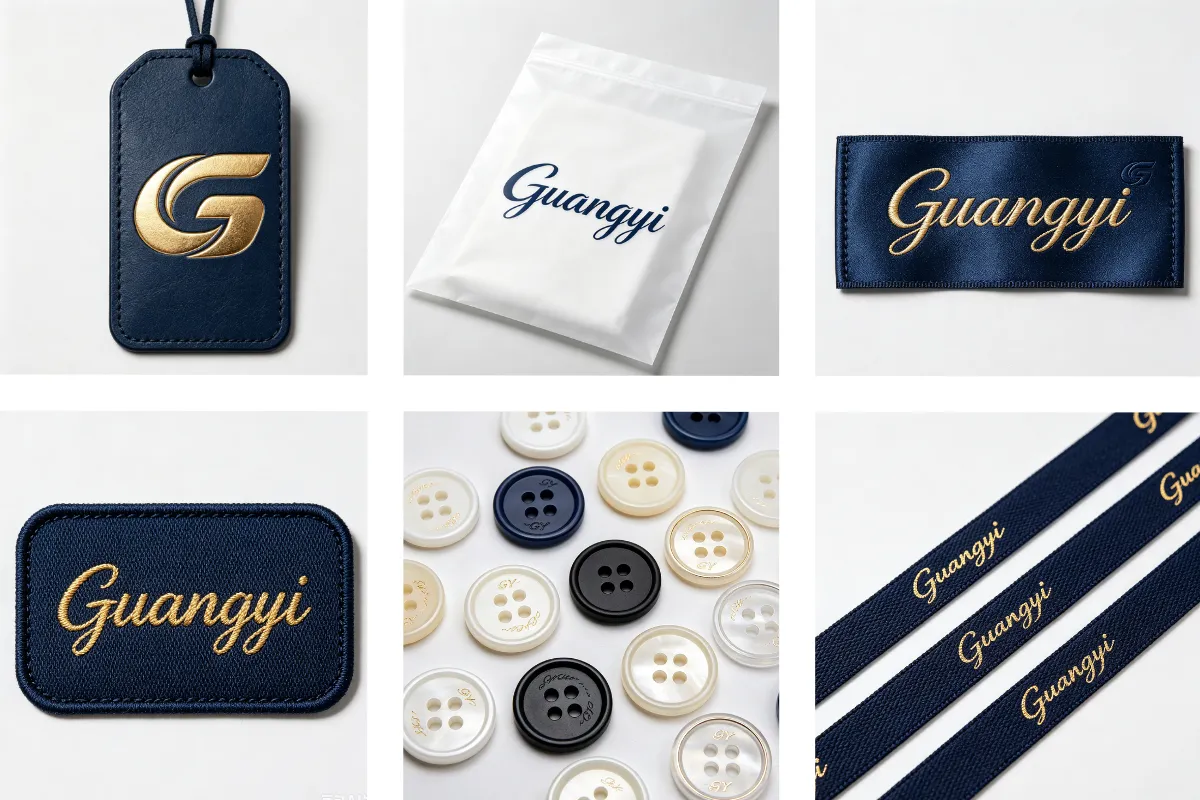
- Style reference — a photo, a tech pack, or a physical sample. A photo plus a description of the fabric is enough to start.
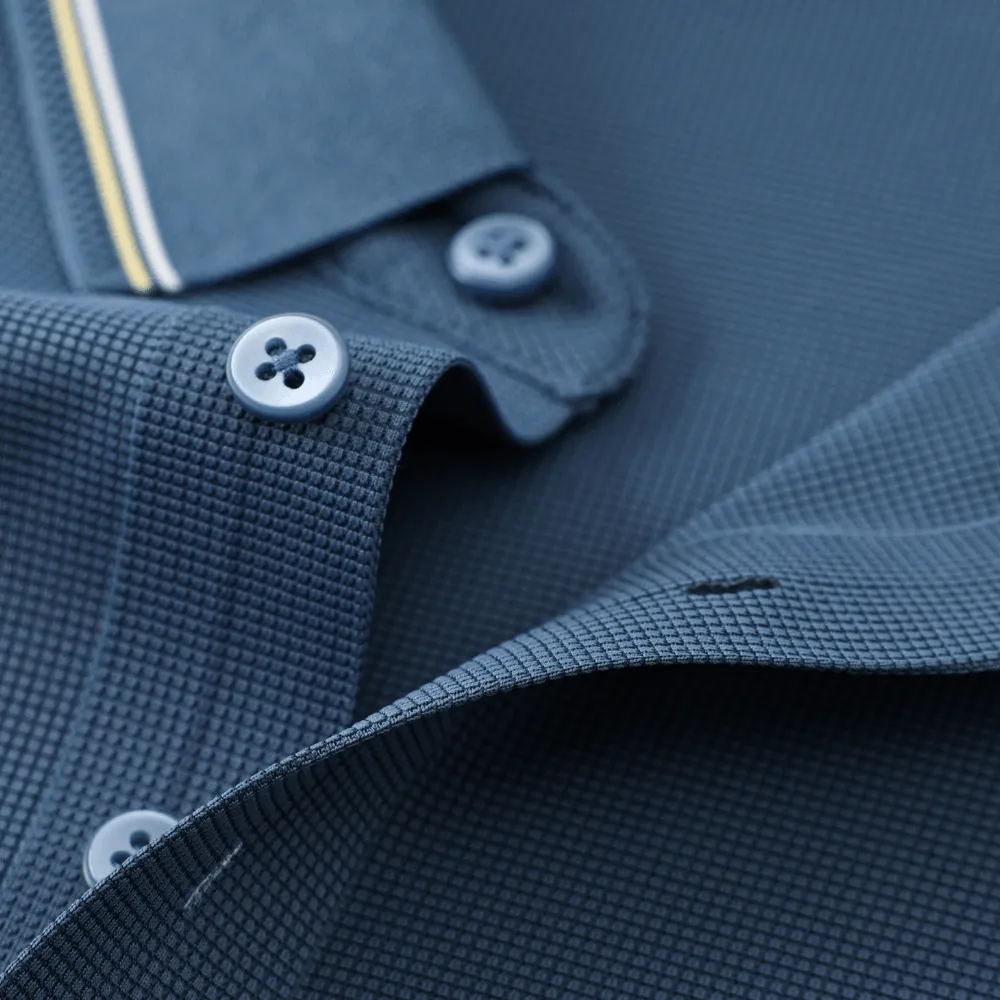
- Fabric and weight — for polos the common range is 160–240 gsm. 180 gsm pique is the workhorse; 220 gsm is the "premium weight" most European and North American brands ask for.
- Colour count — how many colours, and whether they are stock shades or Pantone-matched.
- Size ratio — the split across S/M/L/XL/XXL. This drives fabric consumption and therefore cost.
- Quantity per colour — not just the total. 1,000 pieces in one colour is a different order from 1,000 pieces across eight colours.
- Destination and packing — polybag or hangtag, individual polybag or bulk, any retail-ready requirement.
The single most common cause of a quote that later "goes up" is a size ratio that was never stated. A run weighted towards XXL uses meaningfully more fabric than one weighted towards M.
Step 2 — Request quotes the right way
Send the same six-point brief to three or four factories. Keep the brief identical so the numbers are comparable. When the replies come back, compare them on these lines, not only on unit price:
- Fabric — is the quote for the weight you asked for, or a lighter substitute?
- Colour matching — included, or charged per colour?
- Sampling fee and lead time — and whether it is deducted from the bulk order.
- Payment terms — the standard in China is 30% deposit, 70% before shipment. Anything much looser is a warning sign; anything much stricter deserves a conversation.
- Incoterms — FOB, EXW, or CIF. A price that looks 8% cheaper is often just EXW instead of FOB, which quietly moves freight and export clearance onto you.
A note on price ranges: for a 180 gsm cotton pique polo with one-colour embroidery, quotes in 2026 typically land between USD 3.20 and USD 5.80 FOB depending on quantity, fabric quality, and trim. If one quote is dramatically below the others, ask what fabric it is based on. It is almost always a lighter yarn or a poly-blend.
Step 3 — Sampling, and what the sample fee covers
A sample is not a cost — it is the cheapest insurance in the whole order.
- Sampling lead time: 7–10 working days is normal for knitwear; 5 days if the fabric is in stock and the block already exists.
- Sample fee: usually USD 30–80 per piece for a custom colour, often refundable against the bulk order.
- What you are checking: fabric hand-feel and weight, collar and placket construction, stitch density, colour accuracy against Pantone, size measurements against your grading, and shrinkage after one wash.
Ask for two rounds if anything is off. A factory that resists a second sample round is telling you something about how they will handle a problem in bulk production.
Step 4 — Confirming the order
Once the sample is approved, the factory issues a Proforma Invoice (PI). Check these fields before paying anything:
- Style number and description, matching the approved sample
- Fabric composition and weight
- Colour list with Pantone references
- Size breakdown and total quantity
- Unit price, total value, and Incoterm
- Deposit percentage and balance terms
- Shipment date and port of loading
- Packing specification
The approved sample should be signed and kept by both sides. In a dispute, the signed sample is the only document that settles arguments about "this is not what we agreed".
Step 5 — Production timing, broken down
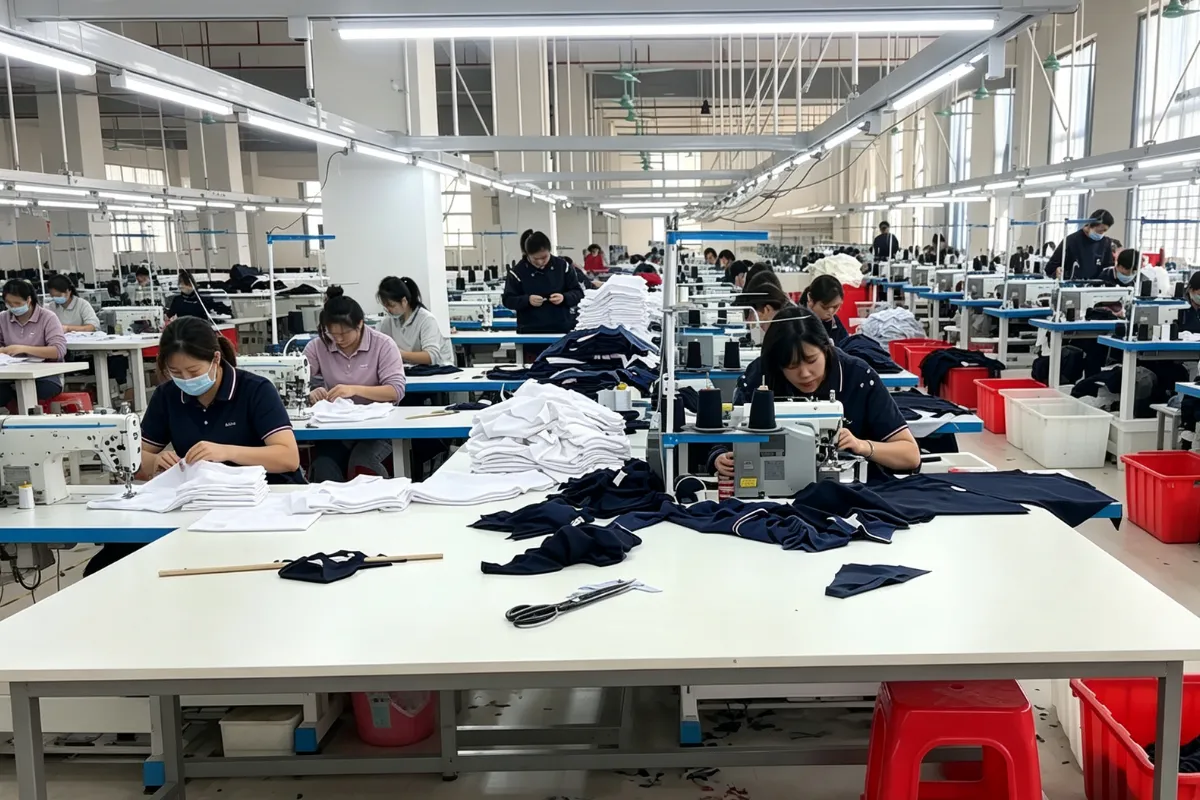
For a 1,000-piece polo order, a realistic schedule looks like this:
| Stage | Duration |
|---|---|
| Fabric knitting / dyeing | 12–18 days |
| Cutting | 2–3 days |
| Sewing | 8–12 days |
| Trimming, pressing, inspection | 3–5 days |
| Packing | 2–3 days |
| Total production | 27–41 days |
Add shipping: 28–35 days to US West Coast, 30–40 days to Europe, 12–18 days to Australia, and 20–30 days to the Gulf. Air freight cuts this to 5–8 days at roughly four to six times the cost.
Plan 45–60 days from deposit to warehouse for a sea shipment. Buyers who plan 30 days are the ones who end up paying for air freight.
Step 6 — Inspection and shipping
Before the balance payment, arrange an inspection. Either use a third-party service (SGS, Intertek, QIMA — typically USD 300–400 per man-day) or ask the factory for a detailed inspection report with photos of measurements, stitching, and packing.
The inspection should cover:
- Measurement check against the size spec, at least 5 pieces per size
- Colour check under daylight against the approved standard
- Needle detection (metal contamination) — standard in any factory shipping to the US or EU
- Carton count and packing list accuracy
Then book freight. For a first shipment, a freight forwarder is worth the small margin they take — they handle export declaration, booking, and the documentation chain.
Mistakes that cost buyers money
- Quoting before specifying. Leads to a price that changes three times.
- Skipping the second sample round. A 2 mm collar difference becomes a 1,000-piece problem.
- Not stating the size ratio. The most frequent cause of a final invoice that exceeds the PI.
- Paying the full amount up front. Standard terms protect both sides; unusual terms usually protect one.
- Ignoring shrinkage. A 5% shrink on a 180 gsm polo turns an L into an M after the first wash. Ask for the tested shrinkage rate before production.
If you are working through this process for the first time, the fastest way to shorten it is to send a complete brief. We quote against a style photo, target weight, colour count, size ratio and destination — usually within one business day, with fabric options attached. You can send your brief here, or browse the catalogue first to pick a reference style.
Planning an order this season?
Send your style, quantity and target price — we reply within one business day with fabric options and a quotation.