MOQ Explained: How Many Pieces Do You Really Need to Start
Why minimum order quantities exist, how they are actually calculated, and six legitimate ways to start smaller without paying a penalty.
"MOQ 500" is one of the most misunderstood numbers in apparel sourcing. It is not a rule invented to exclude small brands. It is an arithmetic consequence of how fabric is dyed, how machines are set up, and how much a factory loses when a run is too short.
Understanding the arithmetic is the fastest way to negotiate a smaller order.
Where the number comes from
Three costs drive MOQ, and they stack:
1. Fabric dyeing. Fabric is dyed in vats. A minimum dye bath is roughly 100–300 kg depending on the mill. For a 180 gsm polo, 200 kg of fabric makes about 550 garment bodies. Below that, the mill either refuses the order or charges a "small lot" surcharge of 20–40%.
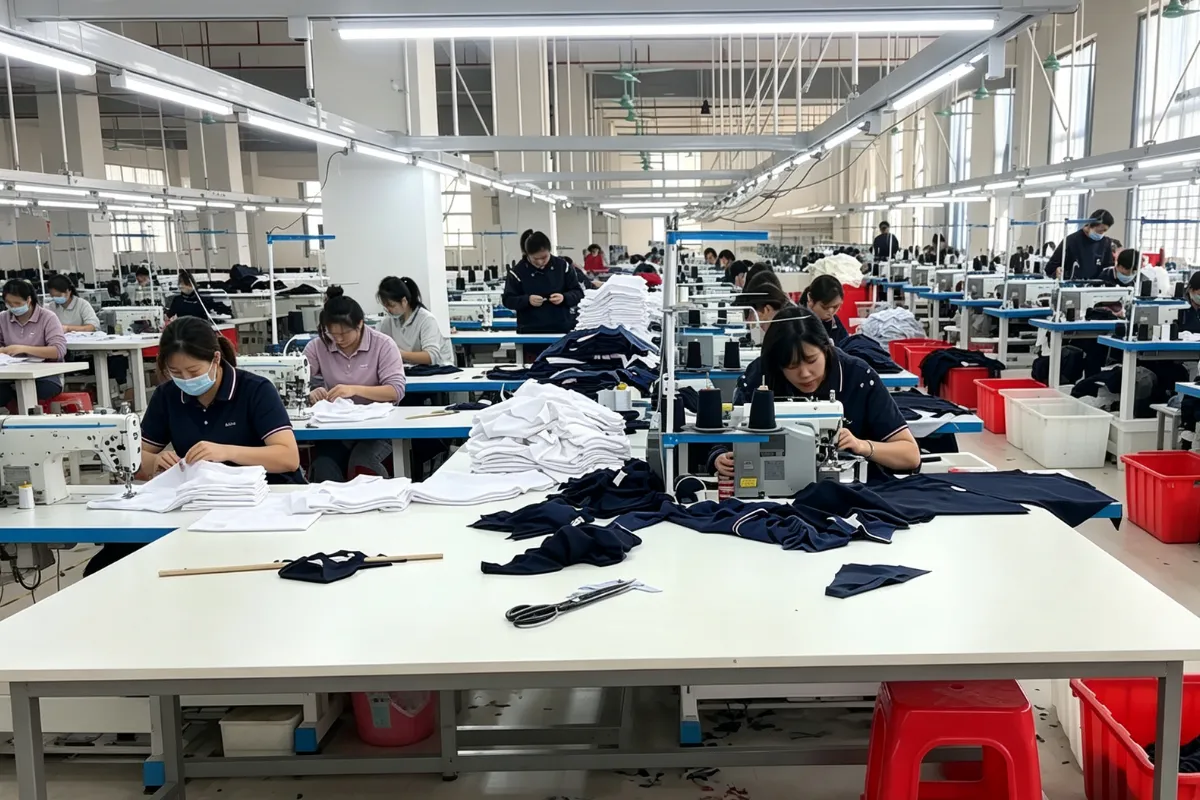
2. Machine setup. Every colour and every size is a separate setup on the cutting table and the sewing line. Setting up a line for 80 pieces costs the same as setting up for 800 — the fixed cost per piece is simply ten times higher.
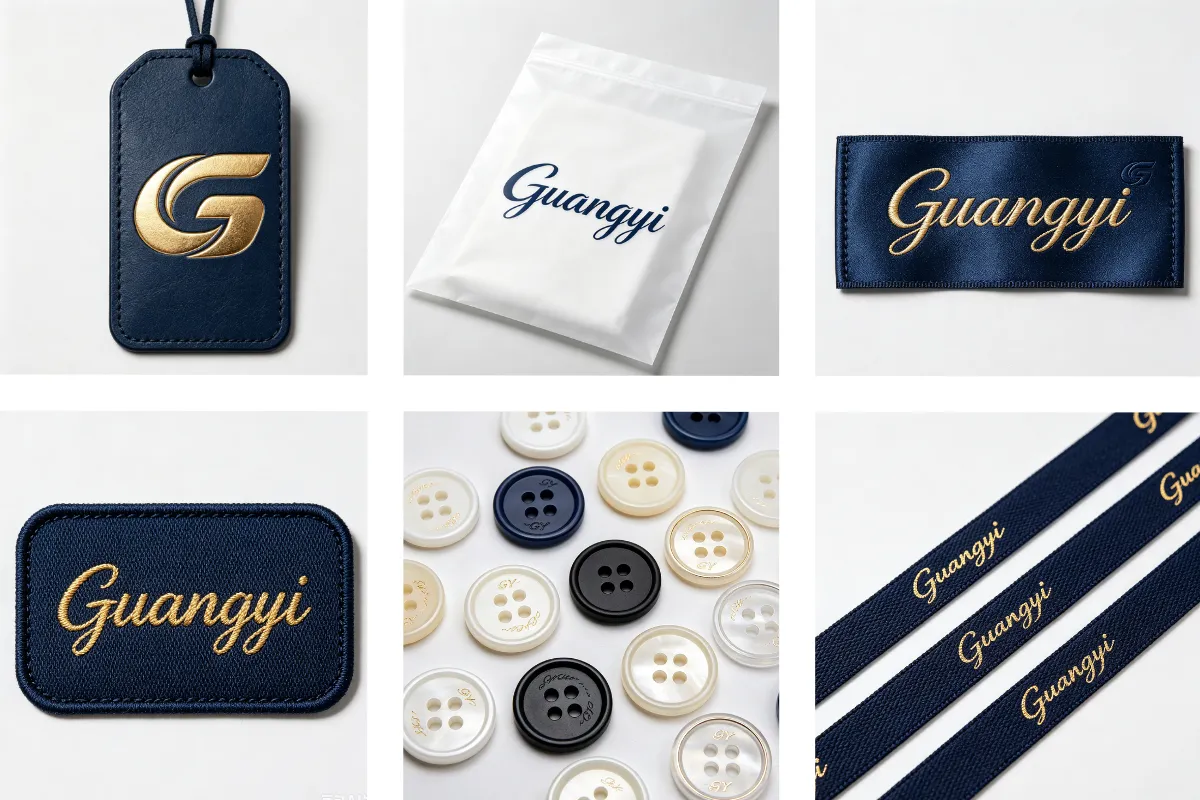
3. Trim minimums. Collars, cuffs, buttons, labels, and polybags all have their own minimums. Custom woven labels typically start at 500–1,000 pieces. Custom collar rib starts at 300 kg.
So when a factory says "300 per colour", they are usually translating: 300 pieces is the point at which the dye bath and the trim minimums stop losing money.
The two numbers that actually matter
Buyers often quote a single total ("I need 1,000 pieces") when factories are thinking in two dimensions:
- Per style — how many pieces of this exact design
- Per colour within the style — how many pieces of each shade
A 1,000-piece order split across five colours is five small orders, not one big one. This is why a buyer asking for 1,000 pieces in eight colours often gets quoted higher per unit than a buyer asking for 400 pieces in two colours.
| Order shape | Typical MOQ response |
|---|---|
| 1,000 pcs, 1 colour | Best price, easiest schedule |
| 1,000 pcs, 3 colours | Normal |
| 1,000 pcs, 8 colours | Small-lot surcharge likely |
| 300 pcs, 1 colour | Possible with stock fabric |
| 300 pcs, 4 colours | Usually refused or 25%+ surcharge |
Six legitimate ways to start smaller
1. Use stock fabric. Mills hold greige and common colours in stock. If you choose from a stock shade card instead of dyeing to Pantone, the dye bath disappears from the equation entirely. MOQ can drop to 100 pieces per colour. The trade-off is a limited palette — usually 15–30 shades.
2. Start with fewer colours. Two colours instead of six cuts your effective minimum by two thirds. Add the other colours on the reorder, once you know which one sells.
3. Use a stock block pattern. If the factory already has a polo block in your target fit, you skip pattern-making and grading. That removes several hundred dollars of setup and often 50–100 pieces of MOQ.
4. Accept a small-lot surcharge. Many factories will run 100–150 pieces per colour for a 15–25% unit price premium. If your retail price supports it, this is a straightforward trade: pay more per piece to test the market with less capital at risk.
5. Split the order across sizes, not colours. Colour is the expensive variable. Size is nearly free — cutting 300 pieces across S–XXL costs almost nothing extra compared with 300 pieces in one size. Ask for a size ratio, not more colours.
6. Combine styles on one fabric. If two styles use the same fabric and the same colour, the dye bath is shared. Two 150-piece styles in one fabric can clear a 300-piece minimum together.
What "low MOQ" does not mean
A factory advertising "MOQ 50" is usually doing one of three things: selling stock goods rather than made-to-order, charging a sample-level price for production, or quoting a number they cannot actually hold once you send a tech pack.
Ask a direct question before you commit: "Is this MOQ for stock fabric in a stock colour, or for a custom Pantone dye?" The honest answer tells you what you are actually buying.
A realistic first order
For a brand launching a polo programme with no existing sales data, a first order that clears most factory minimums without excessive risk looks like:
- 2 styles
- 2 colours each
- 250 pieces per colour
- Size ratio weighted to M/L/XL
- Stock fabric, stock collar, custom woven label
- Total: 1,000 pieces
That is enough to fill a small e-commerce catalogue, test two colourways, and qualify for a normal price. If it sells, the reorder is where the margin improves — the second run has no pattern cost, no sample cost, and better fabric pricing.
The mistake to avoid
The most expensive MOQ decision is ordering too much of a colour that does not sell. Capital tied up in dead stock costs more than a small-lot surcharge ever will.
Start with the smallest order that gets you a real product in front of real customers. Then let the reorder do the work.
We run from 100 pieces per colour on stock fabric, and 200–300 on custom dye. Send your style and we will tell you the actual minimum for your specific fabric and colour before you commit to anything — start here.
Planning an order this season?
Send your style, quantity and target price — we reply within one business day with fabric options and a quotation.