Seamless vs Pique Polo: Which Fabric Actually Sells Better in 2026
A practical comparison of seamless knit and classic pique polos — cost, hand-feel, durability, and which one fits which market and price point.
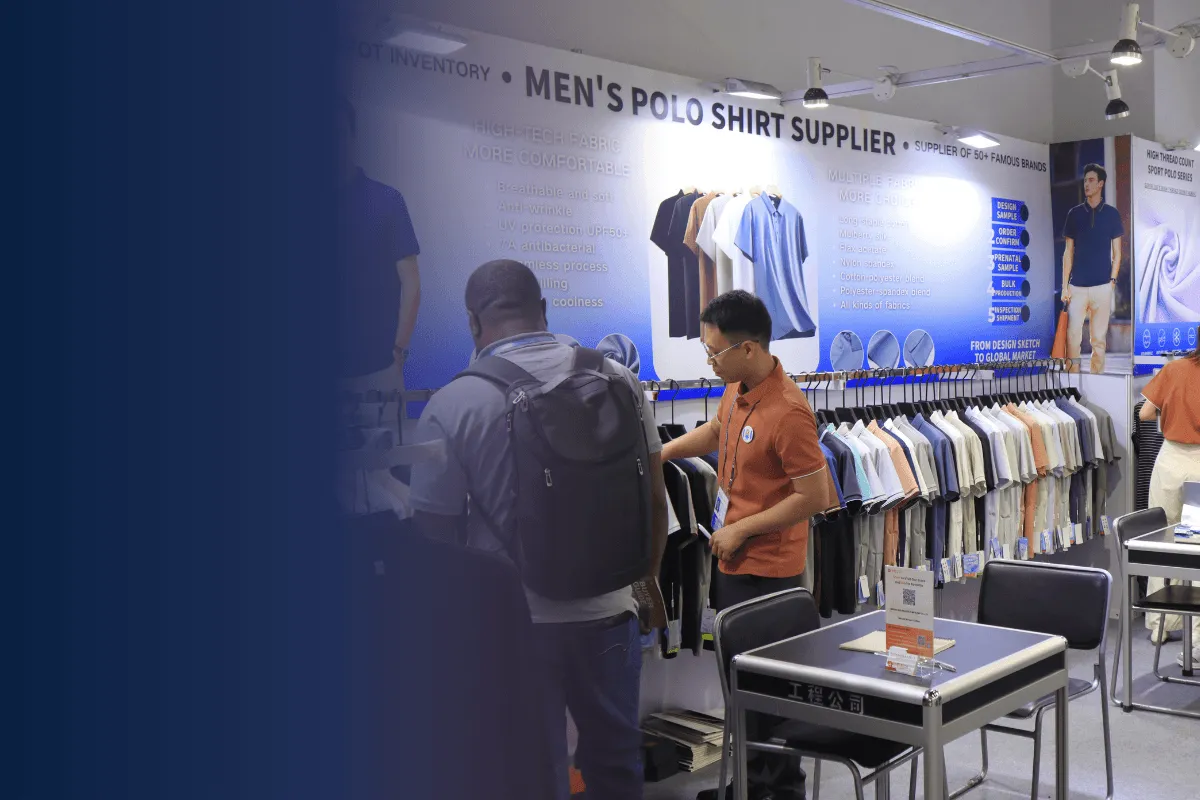
Walk into any apparel sourcing fair in 2026 and you will see the same thing: two walls of polo shirts, one made from classic pique, one made from seamless knit. The seamless wall looks more modern. The pique wall still sells more units. Understanding why is the difference between picking a fabric that photographs well and picking one that reorders.
What "seamless" actually means
The word is a little misleading. A seamless polo is not made without seams — it is knitted as a single tube on a circular machine, so the side seams disappear. Shoulders, collar and placket are still attached separately.
What that changes:
- No side seam means no seam to twist, rub, or pucker. The garment holds its shape through repeated washing better than a cut-and-sew equivalent.
- The body is knitted to shape, so there is less cutting waste — typically 8–12% less fabric per garment.
- Stretch comes from the structure, not from elastane. A well-made seamless polo can hit 15–20% width stretch with zero spandex.
- It is slower to produce. A seamless machine runs one garment body at a time; a pique circular knitter produces a roll of fabric that feeds dozens of cutting tables.
That last point is why seamless costs more per piece, and why MOQ on seamless styles is usually higher than on pique.
What pique actually is
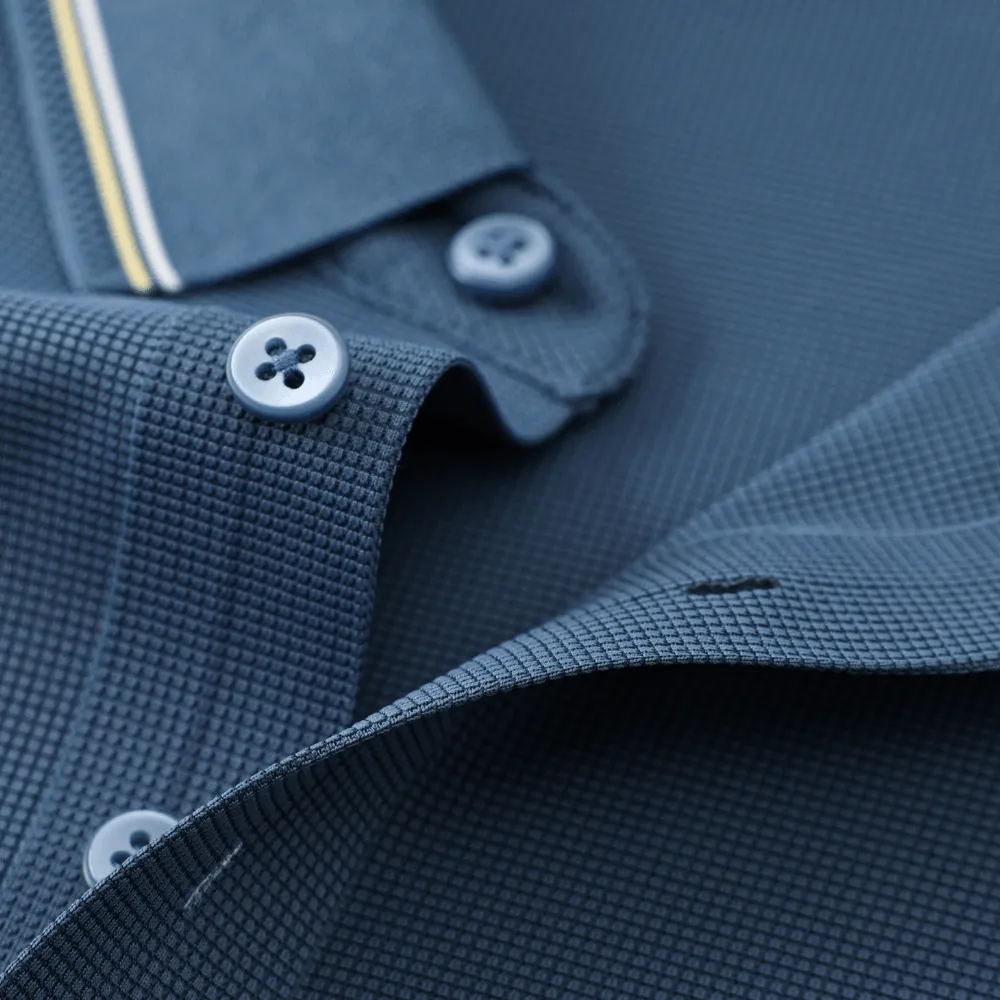
Pique is a double-knit structure with a raised, waffle-like surface. It is the default polo fabric for a reason:
- Airy and breathable — the texture traps less heat against the skin than a flat jersey.
- Holds colour well, especially in deep shades and heathers.
- Structurally honest — it drapes and holds a collar shape without needing elastane.
- Cheap to produce at scale. A 180 gsm cotton pique runs roughly 15–25% less per garment than an equivalent seamless body.
Pique's weakness is the same thing that makes it cheap: the side seam. On a low-quality pique polo, that seam is where you see twisting after ten washes, and where the fit starts to look tired.
Side-by-side, in numbers
| Classic pique | Seamless knit | |
|---|---|---|
| Weight range | 160–240 gsm | 150–220 gsm |
| Stretch without elastane | 3–6% | 15–20% |
| Side seam | Yes | No |
| Fabric waste per garment | 12–18% | 6–10% |
| Typical FOB (1,000 pcs, 180 gsm) | USD 3.20–5.20 | USD 4.10–6.40 |
| MOQ (typical) | 100–200 pcs/colour | 200–500 pcs/colour |
| Sampling time | 7–10 days | 10–14 days |
| Best for | Volume programmes, corporate and promo | Premium retail, golf, athleisure crossover |
The hand-feel difference buyers notice
Pique feels like a shirt. Seamless feels like a performance garment that happens to have a collar.
That distinction matters more than the technical specs, because it determines where the product sits on a shelf:
- A pique polo reads as classic menswear. It works in a resort collection, a corporate uniform programme, a school kit, a promotional catalogue.
- A seamless polo reads as modern active. It works in golf, training-adjacent lifestyle, travel wear, and any brand whose photography involves movement.
If your customer is a 45-year-old buying a shirt for a dinner, pique. If your customer is a 30-year-old buying a shirt for a flight and a round of golf, seamless.
Where each one fails
Pique fails when the yarn is too light and the collar is fused rather than knitted. A 160 gsm pique with a cheap collar looks flat within a month. The fix costs about USD 0.25 per piece: go to 180–200 gsm and use a knitted collar and cuff.
Seamless fails when the machine gauge is too coarse. A low-gauge seamless body has visible needle lines and a slightly plastic hand-feel. The fix is gauge, not weight — 24-gauge machines produce a much finer surface than 18-gauge, at a higher cost.
In both cases the failure is invisible in a photo and obvious in the hand. This is why we send physical samples rather than relying on renderings.
What the market is actually buying
Across the orders we see from North America, Australia, Southeast Asia and the Gulf, the split is roughly:
- 70% pique — still the backbone of volume. Corporate, promo, school, resort, and entry-level retail.
- 25% seamless — growing fastest in golf and premium casual. Buyers here are usually reordering a proven style, not testing.
- 5% other — jersey, interlock, mercerised cotton, wool blends.
The pattern is consistent: seamless is a premium upgrade on a proven product, not usually a first order. Brands that start with seamless tend to be the ones with an existing retail channel and a clear price point above USD 45.
How to decide in ten minutes
Answer three questions:
- What is your retail price? Below USD 30 — pique. Above USD 45 — seamless is viable.
- What is your order size per colour? Below 200 — pique, because seamless MOQ will block you.
- What does your photography look like? Static product shots — pique. Movement and lifestyle — seamless.
If you answer pique, pique, pique, order pique and put the saved margin into a better collar and a heavier weight. If you answer seamless on all three, order samples in both gauges before committing.
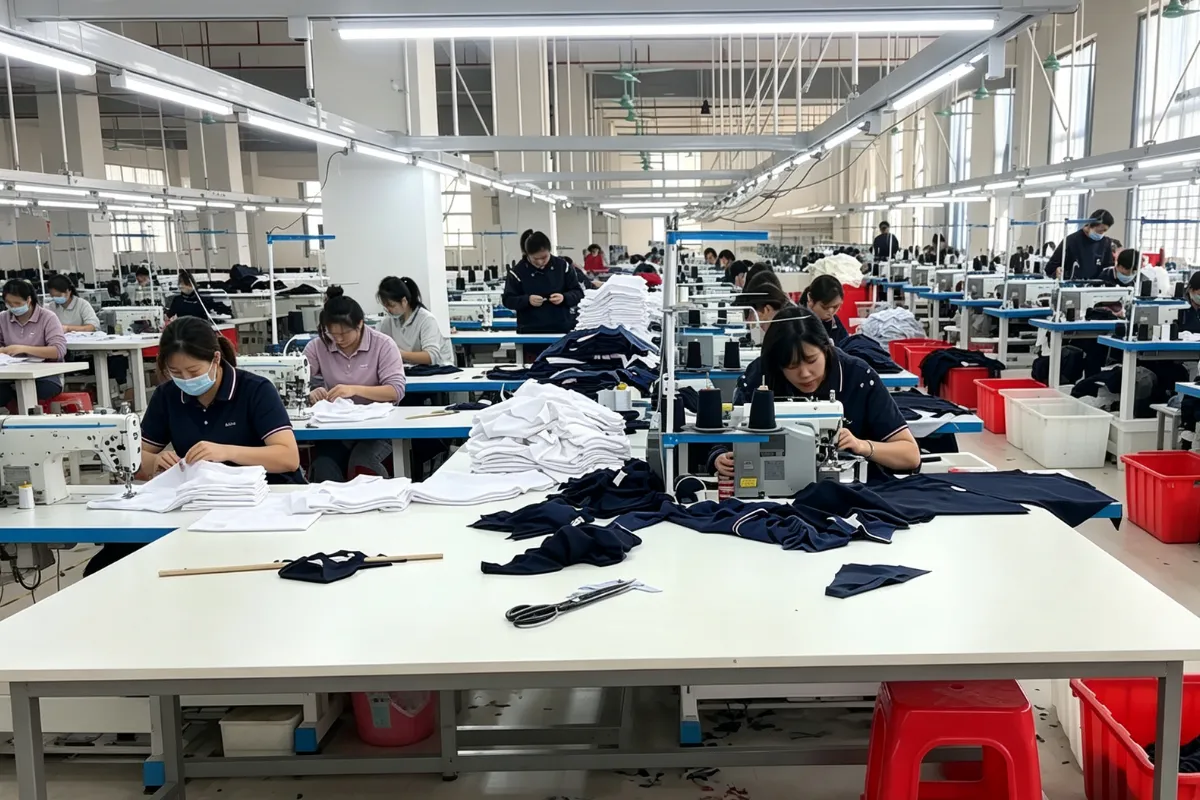
We knit both. If you send a reference style and your target price, we will tell you honestly which construction gets you there — and if the answer is pique, we will say so. Both constructions are in our current range, with fabric weights and MOQ listed per style.
Planning an order this season?
Send your style, quantity and target price — we reply within one business day with fabric options and a quotation.